
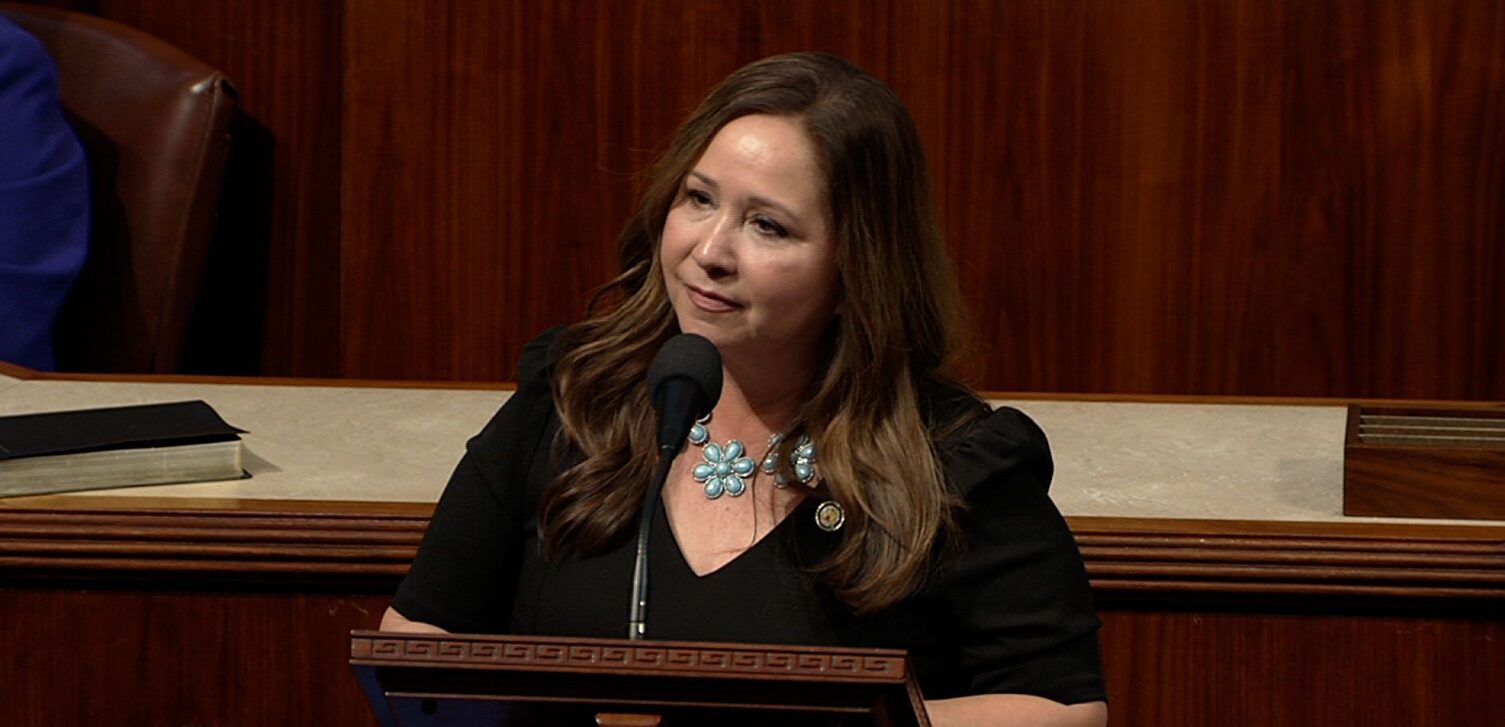
Arizona has seen its share of political turbulence, but few expected a freshman lawmaker to ignite a firestorm within mere weeks of taking office. That’s exactly what happened when Democratic Rep. Adelita Grijalva circulated video footage appearing to show herself in the middle of a heated confrontation with federal immigration agents, surrounded by a crowd of aggressive protesters.
The footage, now spreading rapidly across social media, captures Grijalva standing shoulder-to-shoulder with a group of activists who were loudly challenging federal authorities.
What should have been a routine federal operation quickly became a flashpoint — and the presence of an elected official only intensified the chaos.
A Lawmaker Entering a Riot-Like Scene? Critics Say the Optics Are Devastating
Conservative commentators and border-state residents reacted with shock, arguing that Grijalva’s behavior demonstrates a stunning lapse in judgment. Several veteran lawmakers noted that elected officials carry an elevated responsibility to lower tensions, not escalate them.
Instead, critics contend that Grijalva’s presence legitimized a mob-like confrontation, adding confusion to an already fragile situation. Whether intentional or not, an official standing among protesters confronting federal agents sends a troubling message about authority, order, and respect for the rule of law.
Why This Matters for the Country — Not Just Arizona
What unfolded in that video is more than a local political spat. It reflects a broader and growing national problem:
When elected leaders place activism above governance, the entire system begins to break down.
Analysts warn that when politicians join confrontational protests, rather than working through legal and legislative means, several damaging consequences emerge:
- Public trust erodes. Citizens expect lawmakers to strengthen institutions, not challenge them in the streets.
- Federal officers face greater risk. Situations escalate dramatically when crowds believe they have political backing.
- The border crisis becomes even harder to manage. Any interference — symbolic or physical — undermines operational clarity and public confidence.
- Extremes become normalized. When leaders behave like activists, activists behave like enforcers — a recipe for disorder.
When an elected representative appears to stand against federal authorities in a chaotic environment, it fuels confusion about where the government’s priorities lie and who is actually committed to public safety.
A Distraction From Real Problems Facing Arizona
Arizona is dealing with a historic influx of border-related challenges — strained communities, overwhelmed resources, and urgent security concerns. In moments like these, voters expect:
- professionalism,
- stability,
- leadership,
- and a commitment to lowering tensions.
Instead, what they saw was a political spectacle.
Commentators argue that this kind of behavior distracts from legitimate policy debate and weakens Arizona’s ability to address the crisis seriously. Rather than presenting solutions, Grijalva’s actions risk turning law enforcement into a political prop.
The Backlash Continues to Build
Calls for legislative review are growing, with many insisting that elected officials must uphold standards of conduct that protect citizens — not inflame confrontations. Some lawmakers argue that if the footage accurately reflects obstruction or interference, formal disciplinary action should be discussed, including possible censure.
Regardless of what the legislature decides, one thing is certain:
Grijalva’s first month in office has already raised more questions than answers.
A Moment That Reflects a Bigger National Divide
Americans are increasingly exhausted with leaders who act like influencers instead of policymakers. The country needs stability, clarity, and responsible decision-making — especially in sensitive areas like immigration enforcement.
Whether one supports or opposes federal border policies, most agree that elected officials physically involving themselves in tense enforcement encounters is a dangerous precedent.
What happened in Arizona is a warning sign:
When political theater replaces responsible leadership, the entire nation feels the consequences.